

The Star People
The Novelry Prize said not yet, so I'm sharing it with you first.

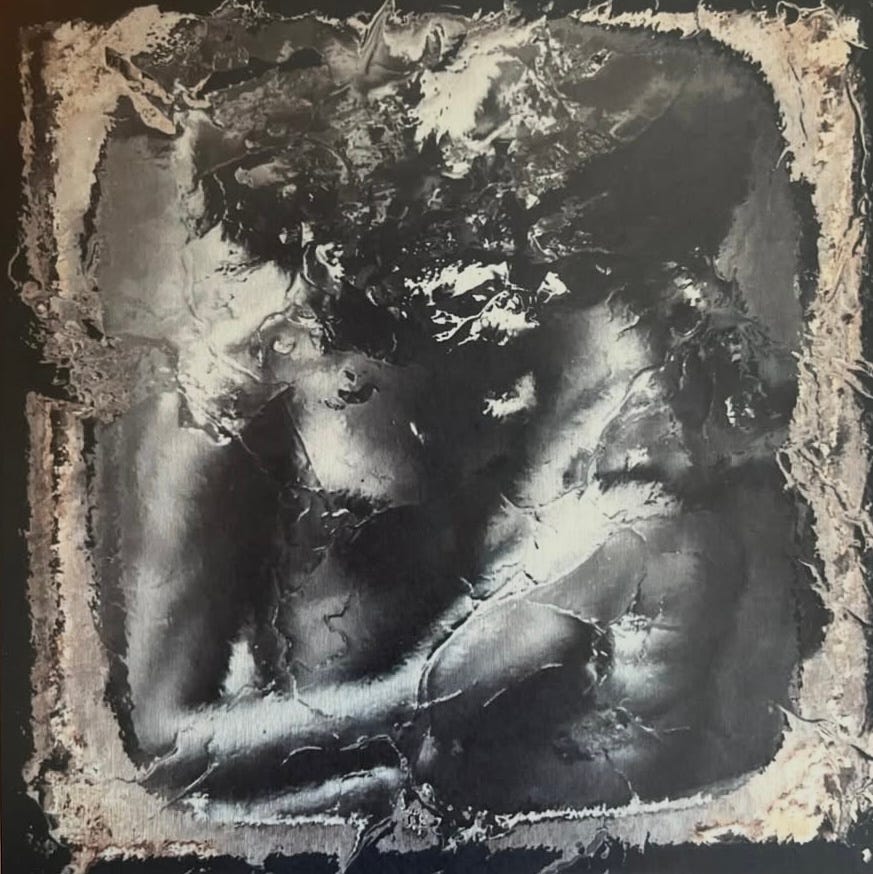
I sent this story out into the world and it didn’t land where I hoped. But I believe in it deeply. So instead of waiting for another yes, I’m letting you read the version that started it all. If this story found you, and stirs something small but certain, consider becoming a paid subscriber to help me build the world this story/book is still becoming.
1
“I dwell in the vibration of wounds that are not mine, but which remember me.”
Aimé Césaire
“Space is the place.”
Sun Ra
“In the beginning was the riddim, and the riddim was with us”
Linton Kwesi Johnson
Before breath, before the throat’s opening, sound was stitched into the origin of everything. A low ache curled in the dark marrow of creation humming inside the stones and murmuring beneath oceans not yet born. Before fire had a name and before the guango tree roots split red clay in search of rain, there was the drum.
This sound was more seeped than skin or wood, it marked origin itself. It signaled the shape of longing before sound could carry it. The syllable of the cosmos, unfinished. Moving through being; tunneling through blood, through root, through memory. When it spoke, everything leaned toward it, even time.
The elders say the Star People remember through rhythm. In this telling, they are not myths. They are the keepers of patterns carrying the past coiled in their hair, each spiral a mirror of the patterns shaping the world around them: the coil of pepper elder stems, the curl of conch shells and the carved shell of the abeng. They move to a memory older than bones.
But memory, like sound, can be scattered. And not all echoes return home.
The night of the Red Veil Convergence, a sky split open in threes. When the moons eclipsed and bled, and silence fell so thick the birds forgot their names, Talani arrived.
No scream. No gasp. No tether to breath.
It was she who sang.
A single note dense enough to crack the old limestone pot, stall the wind, and fold the midwife to her knees. Because that note, impossible as it was, was not born that night. It had been waiting.
Talani grew like a rooted pattern. Inwards. Toward a sound no one else could hear. Her locks curled of their own accord, drawn inward by the same sacred mathematics guiding vine and tide, the language carved into cassia bark and bone. Geometry written by the frequencies beneath her skin. Under moonlight, they pulsed faintly, like veins under star-skin.
At night, her hair whispered rituals and ruins. And sometimes, a breath.
A presence she had never seen but always felt. A warmth at her back in dreams, breathing in time with her.
Once, half-asleep, she thought she heard a name. Something illegible to the naked ear. What seemed to be a pattern strung between two syllables: Ee...sei...
The name dissolved before she could hold it.
But ever since, something in her woke up differently. Like she was already expecting.
She walked without weight, like a girl raised by the water. Stones shifted beneath her but did not resist. Trees made space without knowing why. Her community called her echo child, a name passed in whispers, as if saying it too loud might wake something sleeping.
They said it like an offering or a charm to make sense of the unspoken. The way dogs tilted their heads when she passed or the way the old radio hissed with static when she stepped too close. It wasn’t just her quiet that unsettled them. It was the way silence seemed to follow her into rooms and linger long after she left.
The name was a shape they could place around her strangeness. A boundary and a spell.
It kept the questions at bay.
But Talani did not feel chosen. She felt tuned, as if shaped by hands she had never seen or prepared for a note she had never been taught.
And deep beneath, where worms remember and roots grieve, the Old Drum stirred.
She was thirteen when the rhythm rose again. It felt like a throb beneath the riverbank. Low and deliberate, as if the earth were thinking. She stood barefoot, the hour unwinding around her. Eyes shut. Body swaying with knowledge.
A harmonic loop embedded in the land, a rhythm so precise it echoed the spiral of her own spine.
That night, a firelight summoned her. The Weaver sat where no one else dared, beneath a ring of calabash and blue flame, a child’s crown cradled in her lap, hands moving with slow magic, oil dark and fragrant, catching starlight like a secret hymn.
“Have you ever woken,” the Weaver asked, “with a sound in your chest that wasn’t yours, but refused to leave?”
Talani looked to the flame as it bent in her direction.
“Not a song,” the old woman said. “Something older. Something that remembers you.”
Talani didn’t answer. She didn’t need to. The flame blinked. The Weaver smiled.
“That’s how they return. They return like an ache.”
Without warning, the Weaver began to hum a sound knotted but known.
Talani inhaled. And then she joined.
Their tones met in midair, wrapped around each other like dusk around fire, braided themselves into something neither had known.
The flame bloomed blue.
The Weaver stilled.
“That song,” she said, “Was not taught. It was returned.”
Talani stared into the fire. Her reflection flickered, not just her own, but many before her. A constellation of ancestors.
“What does it mean?”
The Weaver looked at her, but said nothing for a long while. Then said:
“You are not a child. You are the Third Silence. The chord unborn. The note that refused extinction.”
And for a breathless instant, the fire sang back.
your writing evokes an almost spectral quality. beautifully somber.